

Technology moves fast. One week you’re comfortable with your current setup, and the next week there’s a new update, tool, or feature that changes how you work entirely. If you’ve been searching for the latest tech info at BeaconSoft, you’re probably trying to keep up with exactly that kind of change—and honestly, that’s a smart move.
In this article, we’re breaking down what’s new, what’s actually useful, and what you can skip. No fluff, no jargon overload—just practical insight you can use right away.
Why Staying Updated on Beaconsoft’s Tech Actually Matters
Here’s the thing: most people don’t fail because they lack tools. They fail because they’re using outdated versions of tools that already got better.
When you follow the latest tech info at Beaconsoft, you’re not just collecting trivia. You’re positioning yourself to:
- Avoid compatibility issues before they cost you hours of troubleshooting
- Take advantage of new features before your competitors do
- Make smarter decisions about what to adopt and what to ignore
Quick takeaway: Set a recurring 15-minute weekly check-in just to skim tech updates. It’s a small habit that pays off in avoided headaches.
What’s New: A Snapshot of Recent Updates
Let’s get into specifics. Recent developments in the tech space that touch on Beaconsoft’s ecosystem generally fall into a few categories: performance improvements, security patches, integration upgrades, and user experience redesigns.
Performance Improvements
Speed complaints are usually the first thing addressed in any update cycle. Faster load times, reduced lag, and better resource management tend to top the list because they affect every user, regardless of how they use the platform.
Security Patches
This one’s non-negotiable. If there’s a security update in the latest tech info at Beaconsoft, it should be treated as urgent — not optional. Cyberattacks increasingly target smaller platforms and integrations precisely because users assume they’re “too small to matter. ” That assumption is exactly what attackers count on.
Quick takeaway: Never delay a security patch more than 48 hours, even if things “seem fine.”
Integration Upgrades
Modern workflows rarely rely on a single tool. Improved integrations mean smoother data flow between apps, less manual copy-pasting, and fewer sync errors.
How to Actually Apply These Updates (Not Just Read About Them)

Reading about updates is easy. Applying them is where most people drop the ball. Here’s a simple framework:
- Audit first—What are you currently using, and where are the pain points?
- Prioritize security first, performance second, and nice-to-have features last.
- Test in a sandbox—Don’t roll out changes across your entire workflow at once.
- Document—Keep a simple log of what changed and when.
That said, this doesn’t need to be complicated. Even a basic spreadsheet with three columns—Update, Date Applied, and Notes—is enough for most individuals and small teams.
Common Mistakes People Make When Chasing “Latest” Tech
In practice, a lot of people get this wrong in one of two directions.
Some ignore updates entirely, assuming “if it’s not broken, don’t fix it.” The problem? Software that isn’t updated becomes a security liability over time, even if it looks like it’s working fine on the surface.
Others go the opposite direction—updating everything immediately without testing, which sometimes breaks existing workflows or integrations.
The middle ground is where you want to be: informed, but not reckless.
Quick takeaway: Read release notes before updating. They usually flag known issues upfront.
What This Means for Beginners vs. Experienced Users
If you’re new to following tech updates, don’t try to track everything. Start with security-related news and the specific tools you actively use daily. That’s it.
If you’re more experienced, you’re probably already filtering out noise. In that case, the value of staying current on the latest tech info at Beaconsoft lies less in “what’s new” and more in “what’s worth switching to.”
Either way, the goal is the same: stay informed enough to make good decisions without drowning in updates that don’t apply to you.
Where to Find Reliable Updates Going Forward
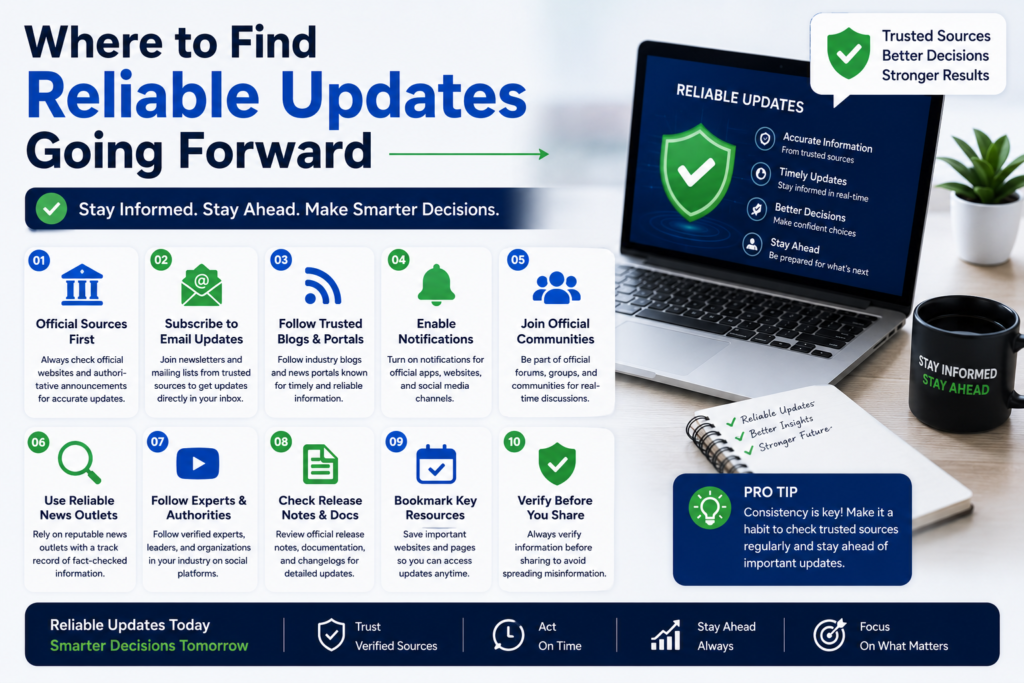
Not every source is worth your time. Official documentation and release notes are typically the most trustworthy places to start, followed by established tech publications that verify information before publishing.
[Add internal link here: Beaconsoft product updates page]
[Add internal link here: how to set up automatic update notifications.]
For broader context on why software update practices matter, credible research and government guidance on cybersecurity hygiene are a good place to cross-check claims.
[Add external link here: CISA cybersecurity best practices]
[Add external link here: a well-known technology publication covering software updates]
A Quick Word on Honesty Here
Not every update is revolutionary. Some releases are minor bug fixes dressed up as “major improvements” in marketing copy. Part of staying genuinely informed is learning to tell the difference between a meaningful change and a cosmetic one. Healthy skepticism serves you better than blind excitement every single time.
Final Thoughts
Keeping up with the latest tech info at Beaconsoft doesn’t have to feel like a full-time job. Focus on security first, test before rolling out changes broadly, and filter updates based on what actually affects your daily workflow.
Here’s the thing — the goal was never to know everything. It’s to know enough to make good calls when it counts.
5. FAQs
Q1: Where can I find the latest tech info at Beaconsoft? The most reliable source is official release notes and documentation, followed by established tech publications. Avoid relying solely on social media summaries, which can misrepresent details of an update.
Q2: How often should I check for updates? A weekly check is usually sufficient for most users. Security-related updates, however, should be applied as soon as they’re verified, ideally within 48 hours of release.
Q3: Is it safe to update immediately after release? Not always. It’s smart to review release notes for known issues first, then test in a low-risk environment before applying updates across your full workflow.
Q4: What’s the biggest mistake people make with tech updates? The two extremes are ignoring updates entirely or applying every update instantly without testing. Both create avoidable risks — one from neglect, the other from lack of caution.
Q5: Do I need to track every single update? No. Focus on updates relevant to tools you actively use, especially anything security-related. Trying to track everything usually leads to burnout and information overload.
Q6: How is this different from general tech news? The latest tech info at Beaconsoft is more targeted — it focuses specifically on updates, patches, and features relevant to that ecosystem, rather than broad industry news.