
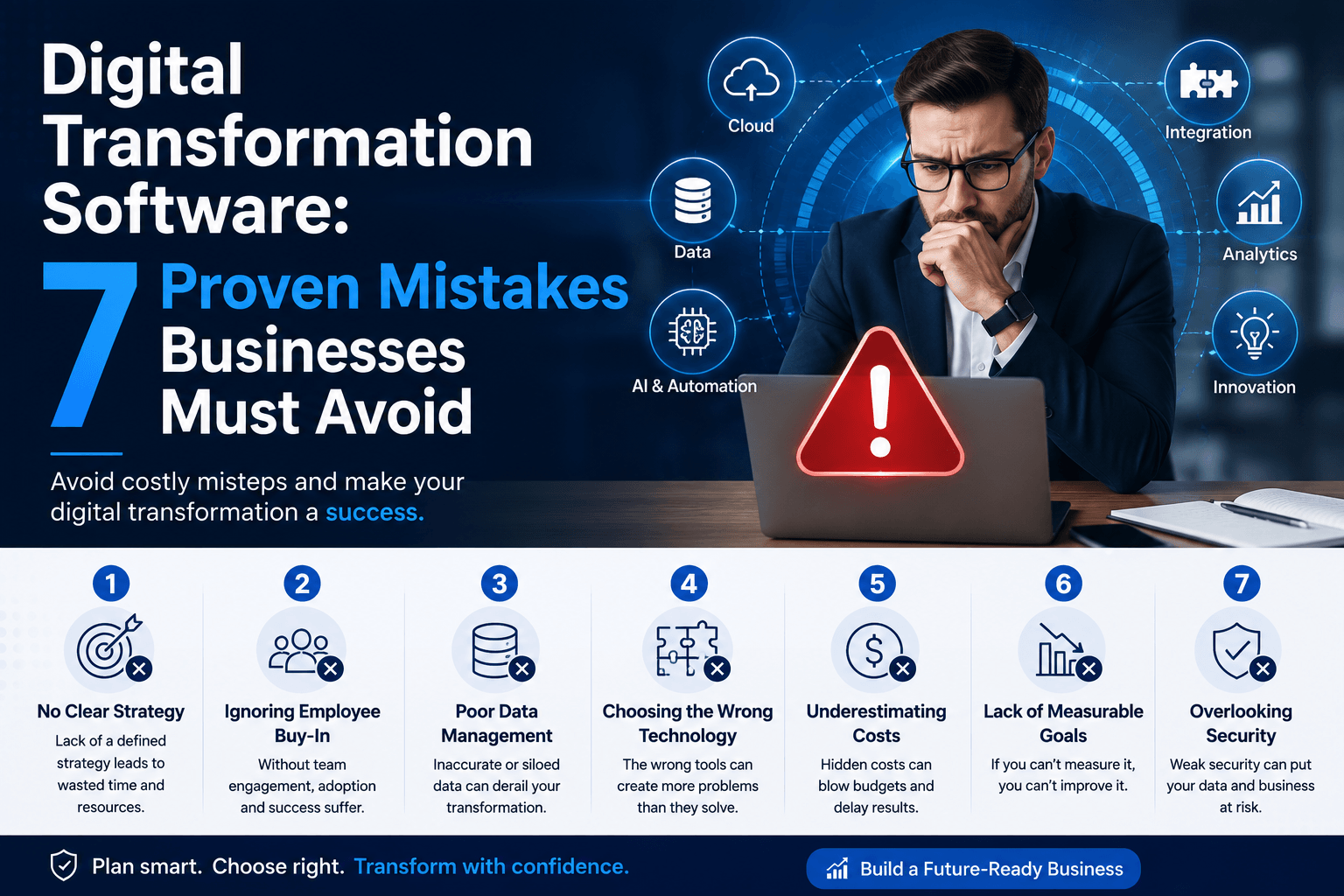
Let’s be honest — every company today claims to be “going digital.” But here’s the thing: not every business actually knows what that means in practice. Somewhere between the buzzwords and the boardroom slides, the real purpose of digital transformation software often gets lost.
If you’ve ever sat through a meeting where someone says “we need to digitize everything” without a clear plan, you already know how messy this process can get. That’s exactly why so many companies end up spending thousands of dollars on tools that don’t actually solve their problems.
In this article, we’ll walk through what digital transformation software really does, the common mistakes businesses make when adopting it, and how you can avoid falling into the same traps. Think of this as a practical guide, not another theory-heavy explainer.
What Is Digital Transformation Software, Really?
At its core, digital transformation software refers to the tools and platforms that help organizations shift from manual, paper-based, or outdated systems to integrated digital workflows. This includes everything from cloud-based ERP systems to automation platforms and data analytics dashboards.
But here’s what most people miss: it’s not just about installing new software. It’s about rethinking how a business operates from the ground up.
Quick takeaway: Before choosing any tool, ask yourself—are we solving a real operational problem or just following a trend?
Mistake #1: Choosing Software Before Defining the Problem
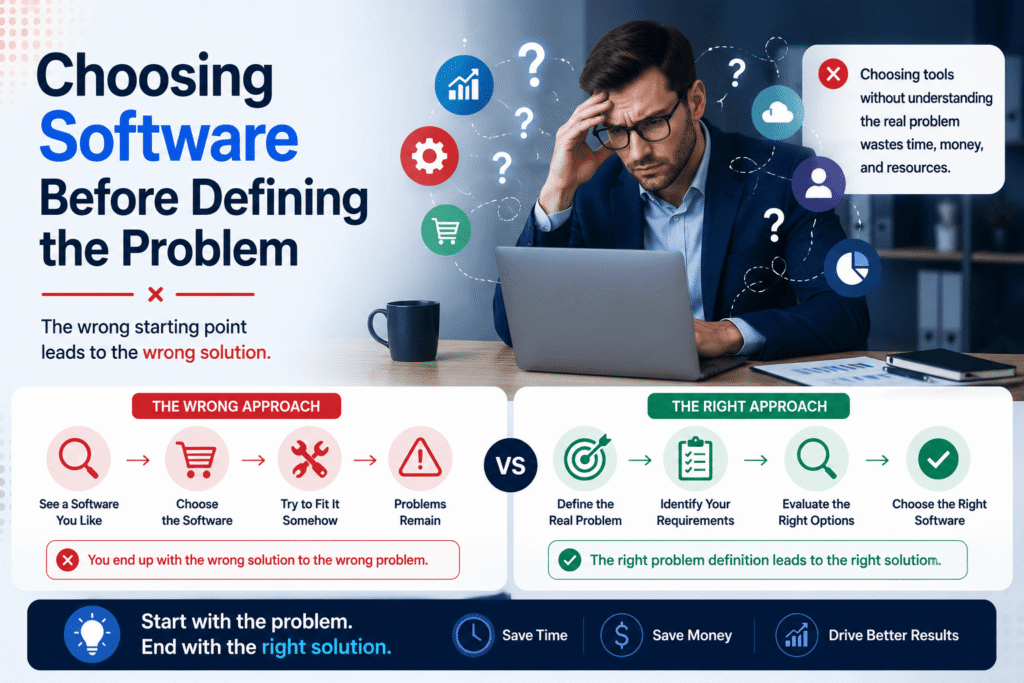
This is probably the most common mistake businesses make. They see a competitor using a slick new platform and assume they need the same thing.
The truth is, digital transformation software only works when it’s matched to a specific need — whether that’s reducing manual data entry, improving customer response times, or connecting disconnected departments.
Instead of asking, “What’s the best software out there?” ask, “What exact problem are we trying to fix?” That single shift in mindset changes everything.
Quick takeaway: Map your pain points first. Software selection should always come second.
Mistake #2: Ignoring Employee Training
Even the most powerful digital transformation software becomes useless if your team doesn’t know how to use it properly. Companies often spend a huge budget on new tools but allocate almost nothing toward training.
In practice, resistance to change is one of the biggest reasons digital transformation projects fail. People stick to old habits because new systems feel intimidating or confusing.
A simple fix? Build a short onboarding plan with hands-on sessions, not just a PDF manual nobody reads.
Quick takeaway: Budget for training the same way you budget for the software itself.
Mistake #3: Overlooking Data Security
With more processes moving online, data security becomes a serious concern. Many businesses rush into digital transformation without checking whether their chosen software meets compliance and security standards.
This is especially critical for industries handling sensitive customer information, like healthcare or finance. A single data breach can undo years of trust-building with customers.
Before finalizing any platform, check its encryption standards, access controls, and compliance certifications such as [Add external link here: NIST cybersecurity framework].
Quick takeaway: Security should never be an afterthought — it’s part of the transformation itself.
Mistake #4: Trying to Automate Everything at Once
There’s a strong temptation to digitize every single process the moment new software is introduced. But that’s rarely a smart move.
Successful transformation usually happens in phases. Start with one department or one workflow, measure the results, then expand gradually. This approach reduces disruption and gives your team time to adapt.
Think of it like renovating a house — you don’t tear down every wall at once.
Quick takeaway: Start small, prove the value, then scale up.
Mistake #5: Not Involving the Right Stakeholders
Digital transformation isn’t just an IT project — it affects sales, HR, operations, and customer service too. Yet many companies leave these departments out of the decision-making process.
This often leads to software that looks great on paper but doesn’t fit how teams actually work day-to-day.
Quick takeaway: Involve department heads early. Their input often reveals practical issues that leadership alone might miss.
Mistake #6: Focusing Only on Cost, Not Long-Term Value
It’s easy to get drawn toward the cheapest option available. But low upfront cost doesn’t always mean long-term savings. Some budget tools lack scalability, integration options, or proper customer support — all of which cost more down the line.
Instead, evaluate digital transformation software based on total value: How well does it integrate with your existing systems? Can it grow with your business? Does it offer reliable support when something breaks?
Quick takeaway: Calculate long-term ROI, not just the initial price tag.
Mistake #7: Skipping Post-Implementation Reviews
Many businesses treat software rollout as the finish line. In reality, it’s just the beginning. Without regular check-ins, it’s hard to know whether the software is actually delivering results.
Set a review schedule — monthly or quarterly — to track adoption rates, efficiency gains, and employee feedback. This keeps your transformation strategy aligned with real outcomes, not assumptions.
Quick takeaway: Treat implementation as an ongoing process, not a one-time event.
How to Choose the Right Digital Transformation Software
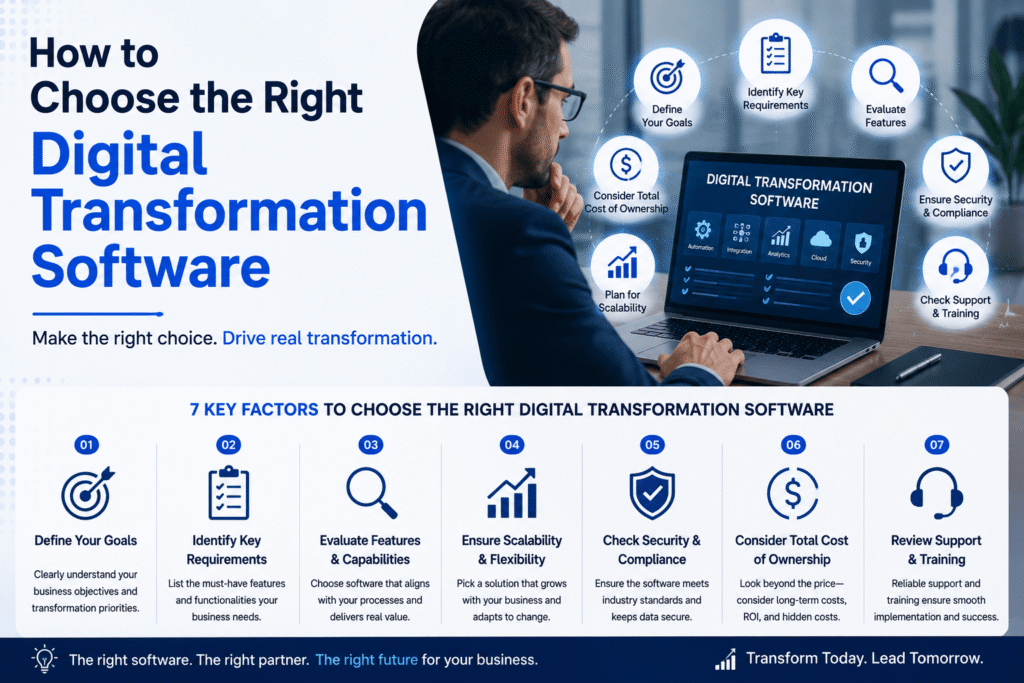
Now that we’ve covered the mistakes, let’s talk about what actually works. Here’s a simple checklist to guide your decision:
- Does it solve a specific, well-defined business problem?
- Is it scalable as your company grows?
- Does it integrate smoothly with your current tools?
- What does customer support look like?
- Is there a clear onboarding and training plan?
According to research from [Add external link here: McKinsey Digital], organizations that align technology choices closely with business strategy see significantly better transformation outcomes than those that adopt tools reactively.
For more insights on aligning software with business goals, check out our [Add internal link here: business process automation guide] and [Add internal link here: choosing the right SaaS tools for small businesses].
Final Thoughts
Digital transformation software has the power to genuinely reshape how a business operates — but only when it’s chosen and implemented thoughtfully. The mistakes we covered here aren’t rare; they happen in companies of every size, from startups to large enterprises.
The good news? All of them are avoidable. Define your problem clearly, involve the right people, train your team, and treat the process as ongoing rather than a one-time fix. Do that, and your transformation journey will look a lot less like guesswork and a lot more like a strategy that actually pays off.
5. FAQs Section
Q1: What is digital transformation software used for? Digital transformation software helps businesses move from manual or outdated processes to integrated digital systems, improving efficiency, communication, and data-driven decision-making across departments.
Q2: How do I choose the right digital transformation software for my business? Start by identifying your specific operational problems. Then evaluate software based on scalability, integration capability, security, and long-term value rather than just upfront cost.
Q3: Is digital transformation software expensive for small businesses? Not necessarily. Many digital transformation software options offer scalable pricing plans, making them accessible for small businesses that start with a single workflow before expanding.
Q4: What are the biggest risks of digital transformation software adoption? Common risks include poor employee training, weak data security, and trying to automate too many processes at once, which can overwhelm teams and reduce overall effectiveness.
Q5: How long does it take to implement digital transformation software? Implementation timelines vary depending on business size and complexity, but most companies see initial results within three to six months when following a phased rollout approach.
Q6: Does digital transformation software require technical expertise to use? Many modern platforms are designed with user-friendly interfaces, but proper training is still essential to ensure teams can use the software efficiently and confidently.